Ridge & Furrow at Stubton: History and Significance
The term “ridge and furrow” refers to the distinctive undulating patterns found in many fields across England, including those near Stubton in Lincolnshire. These patterns are the result of medieval ploughing techniques and are a visible reminder of the agricultural history of the area.
What is Ridge and Furrow?
- Formation: Ridge and furrow patterns were created by repeated ploughing with non-reversible ploughs, which always turned the soil in the same direction. Over years, this built up ridges (raised areas) and furrows (troughs) in the fields.
- Purpose: This method was practical for medieval farmers. The ridges helped with drainage and allowed the soil to warm up faster in spring, improving crop yields. The furrows carried away excess water, which was especially useful in wetter climates. [britainexplained.com]
- Appearance: The ridges are typically parallel, spaced 3 to 22 yards (3 to 20 meters) apart, and can be up to 24 inches (61 cm) high. Older examples often have a curved, reversed ‘S’ shape, reflecting the way oxen teams turned at the end of each strip. [ruralhistoria.com]
Ridge and Furrow in Stubton
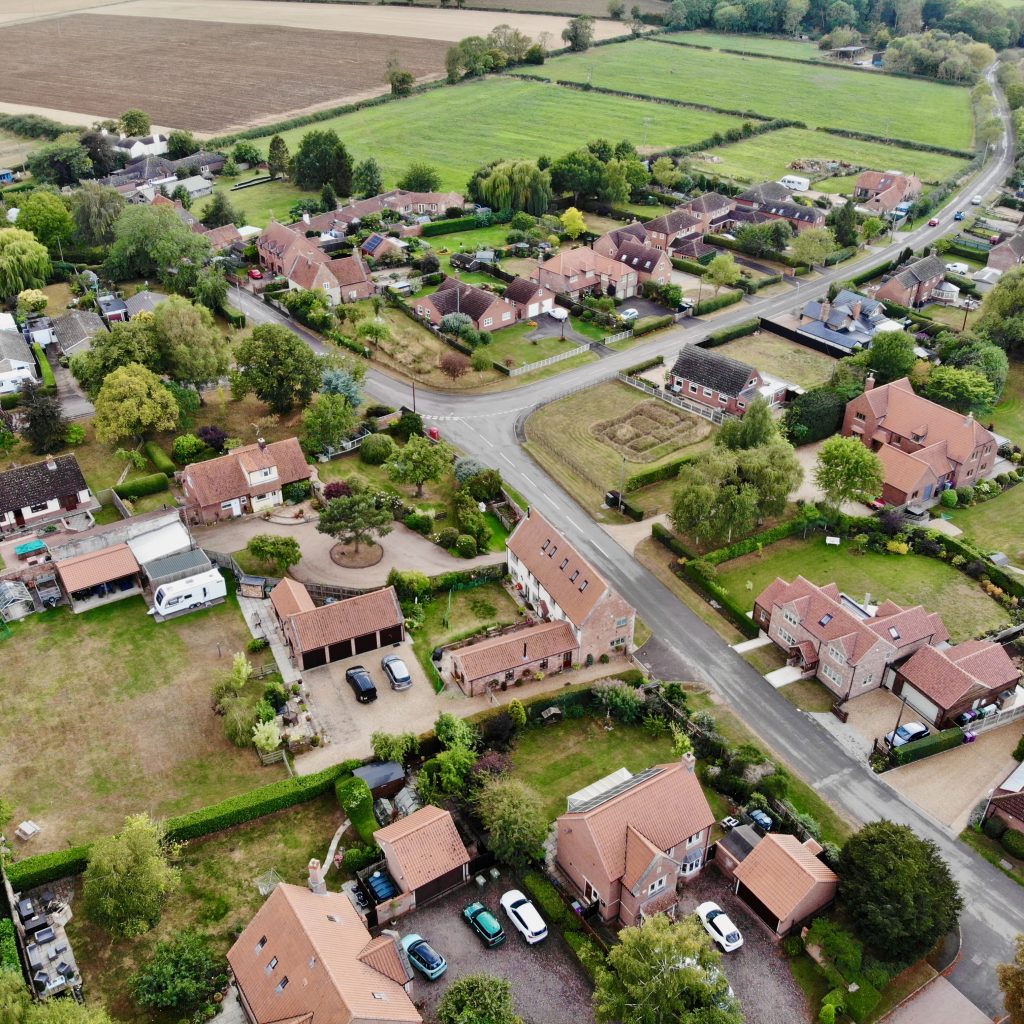
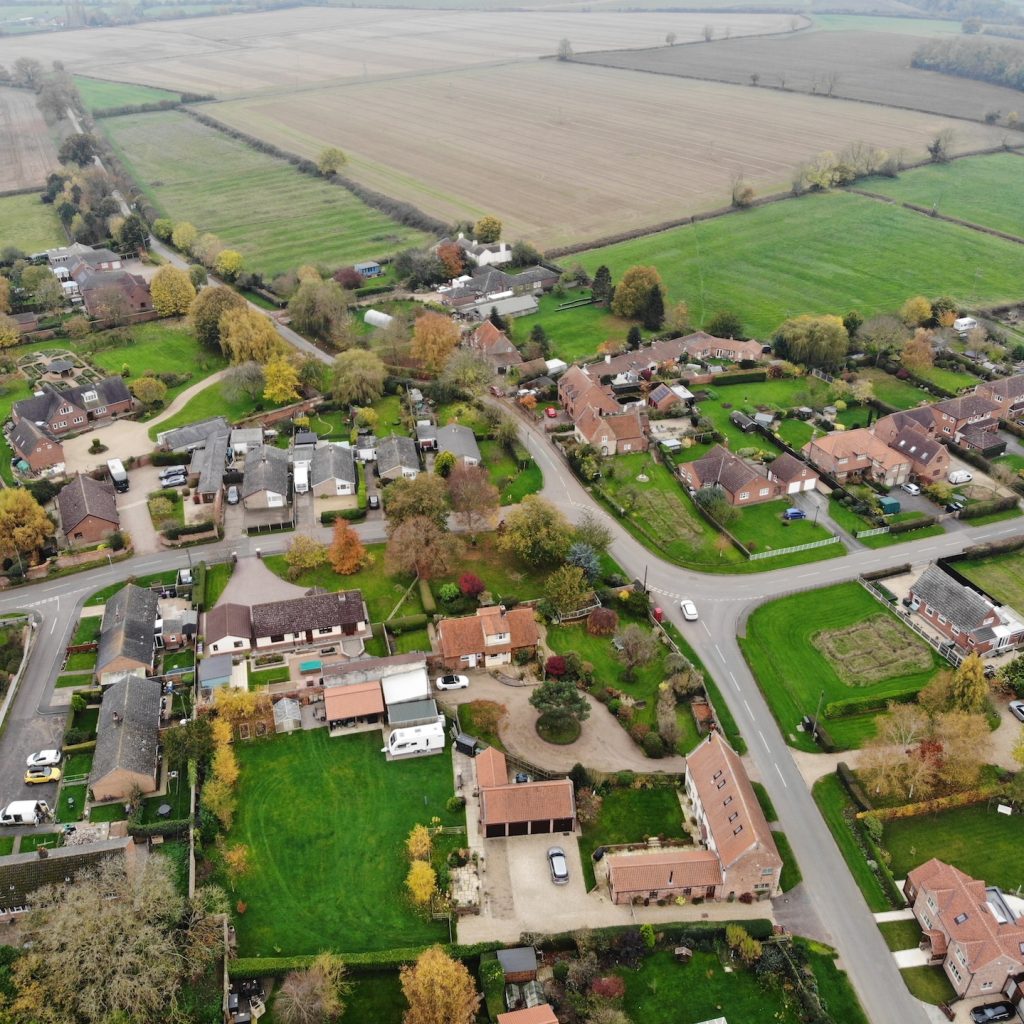
- Location: There are well-documented medieval ridge and furrow earthworks to the south of Stubton, Lincolnshire. These are visible in aerial photographs and have been recorded by the National Mapping Programme. [heritage-e…ire.gov.uk]
- Historical Context: The Stubton ridge and furrow system dates from the medieval period (1066–1539 AD) and is part of a larger open-field system that once dominated English agriculture. Each family would have farmed strips within these large communal fields. [en.wikipedia.org]
- Preservation: While many ridge and furrow patterns have been lost to modern ploughing, some, like those at Stubton, survive as earthworks and are important archaeological features. They provide insight into medieval farming practices and land management. [heritage-e…ire.gov.uk]
Why is it Significant?
- Cultural Heritage: Ridge and furrow fields are a living record of medieval rural life and community farming. They show how land was shared and managed before the enclosure movement, which divided common fields into private plots.
- Landscape Character: These patterns contribute to the unique appearance of the English countryside, especially in areas like Lincolnshire where they are still visible. [britainexplained.com]
- Archaeological Value: Studying ridge and furrow helps historians and archaeologists understand settlement patterns, agricultural development, and even population density in medieval times. [jstor.org]
In summary: The ridge and furrow earthworks at Stubton are a significant remnant of medieval agriculture, illustrating centuries-old farming techniques and the communal life of rural England. Their preservation offers valuable insights into the landscape and history of Lincolnshire.