Types of Fungi Found on Trees
Fungi that grow on trees can be grouped into three main categories, each with different roles and impacts:
1. Saprophytic Fungi
- Role: Decompose dead or decaying wood, recycling nutrients back into the soil.
- Examples: Shelf fungi (like Ganoderma), honey fungus (Armillaria), and bracket fungi.
- Impact: Essential for forest health, as they break down dead material and enrich the soil. They do not harm living trees directly, but their presence often signals dead or dying wood.
2. Parasitic Fungi
- Role: Infect and feed on living trees, often causing disease and decay.
- Examples: Honey fungus (Armillaria mellea), Dutch elm disease (Ophiostoma), oak wilt (Ceratocystis fagacearum), and root rot fungi (Phytophthora).
- Impact: Can weaken or kill trees by attacking roots, trunks, or leaves. They may cause structural instability, making trees hazardous.
3. Mutualistic (Mycorrhizal) Fungi
- Role: Form symbiotic relationships with tree roots, exchanging nutrients for sugars.
- Examples: Mycorrhizal fungi (Glomus, Rhizophagus).
- Impact: Enhance tree nutrient and water uptake, improve resilience, and are vital for healthy forests. [talesofthetrees.com]
Common Fungi Seen on Trees
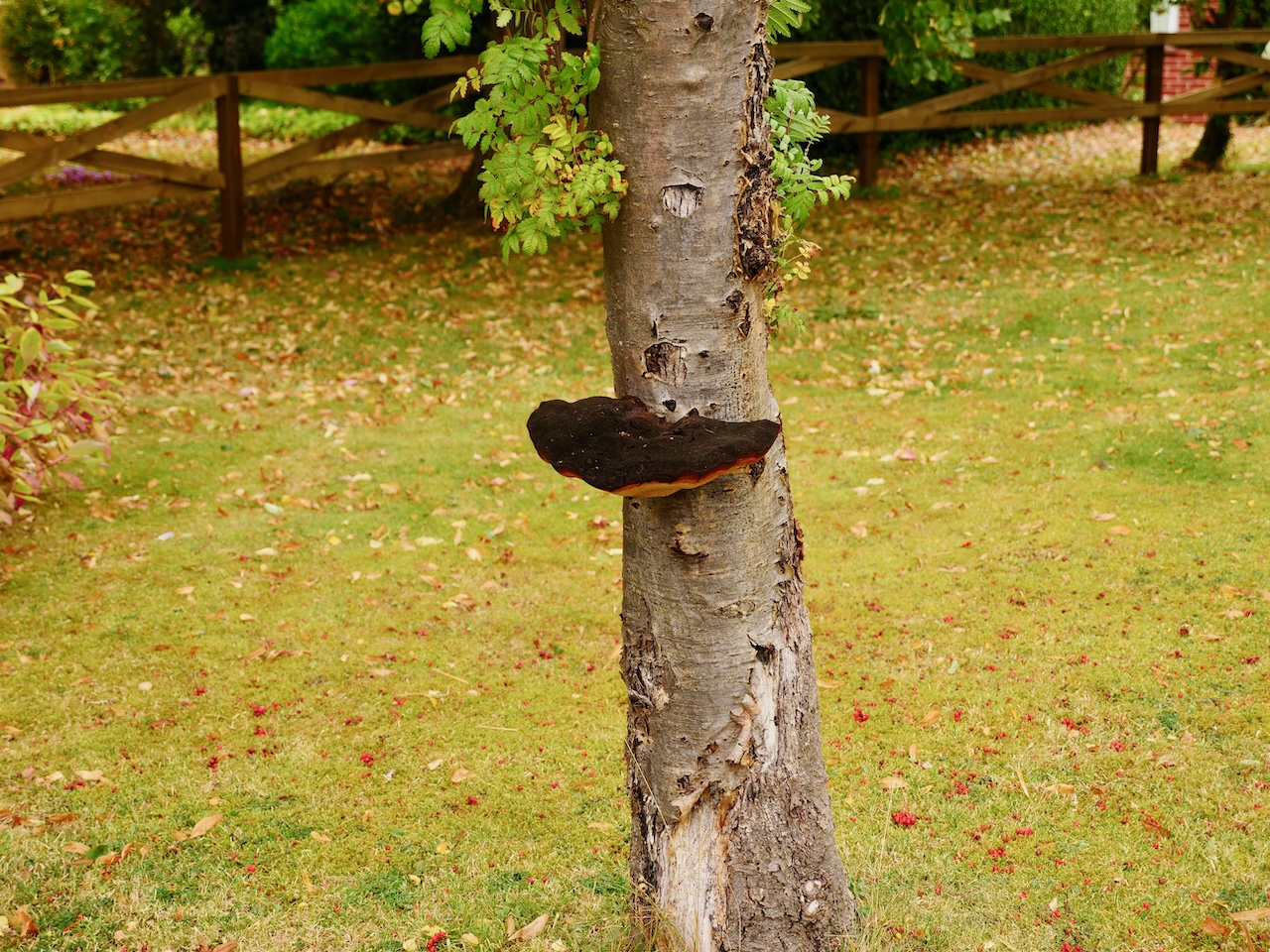
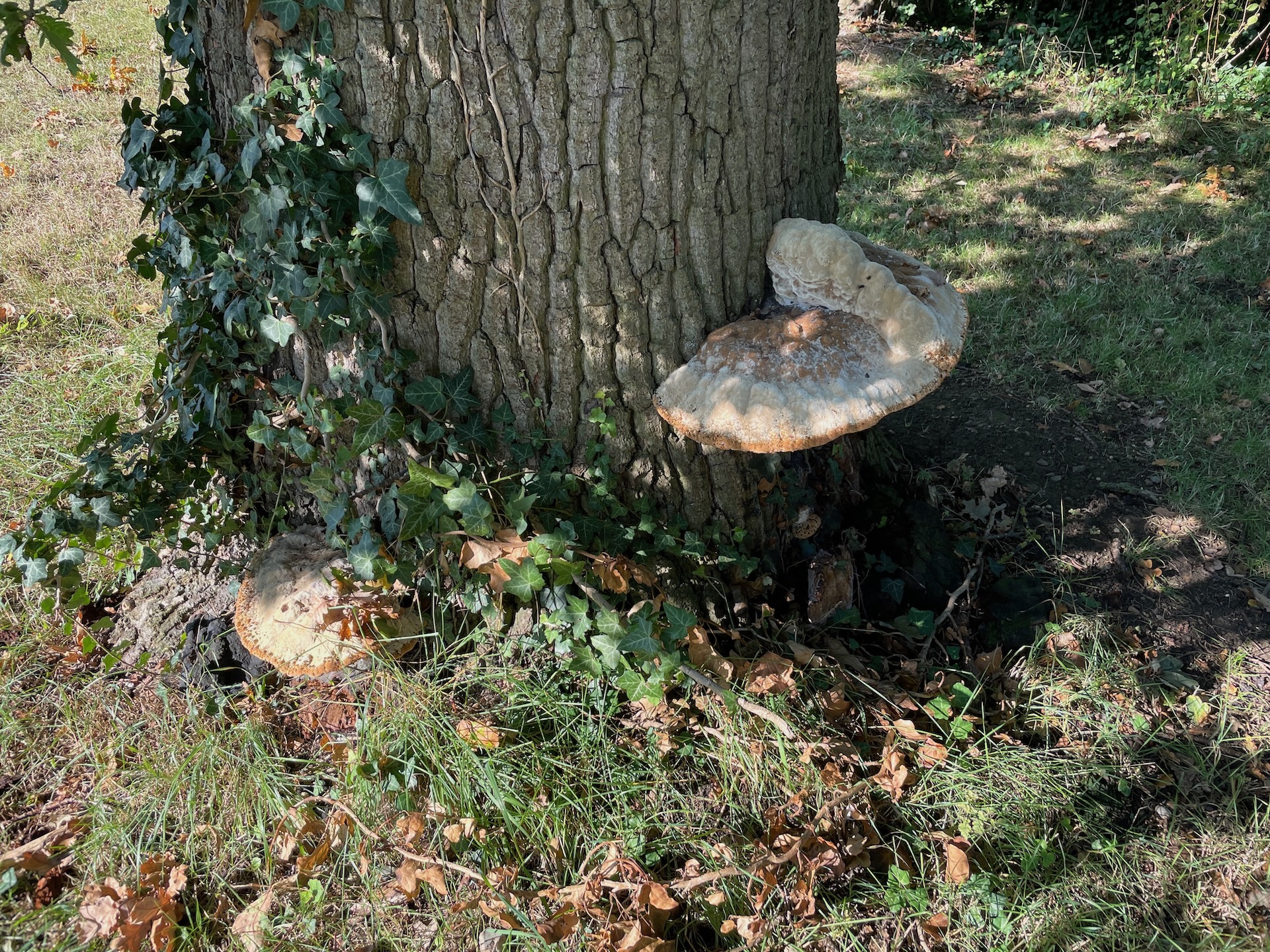
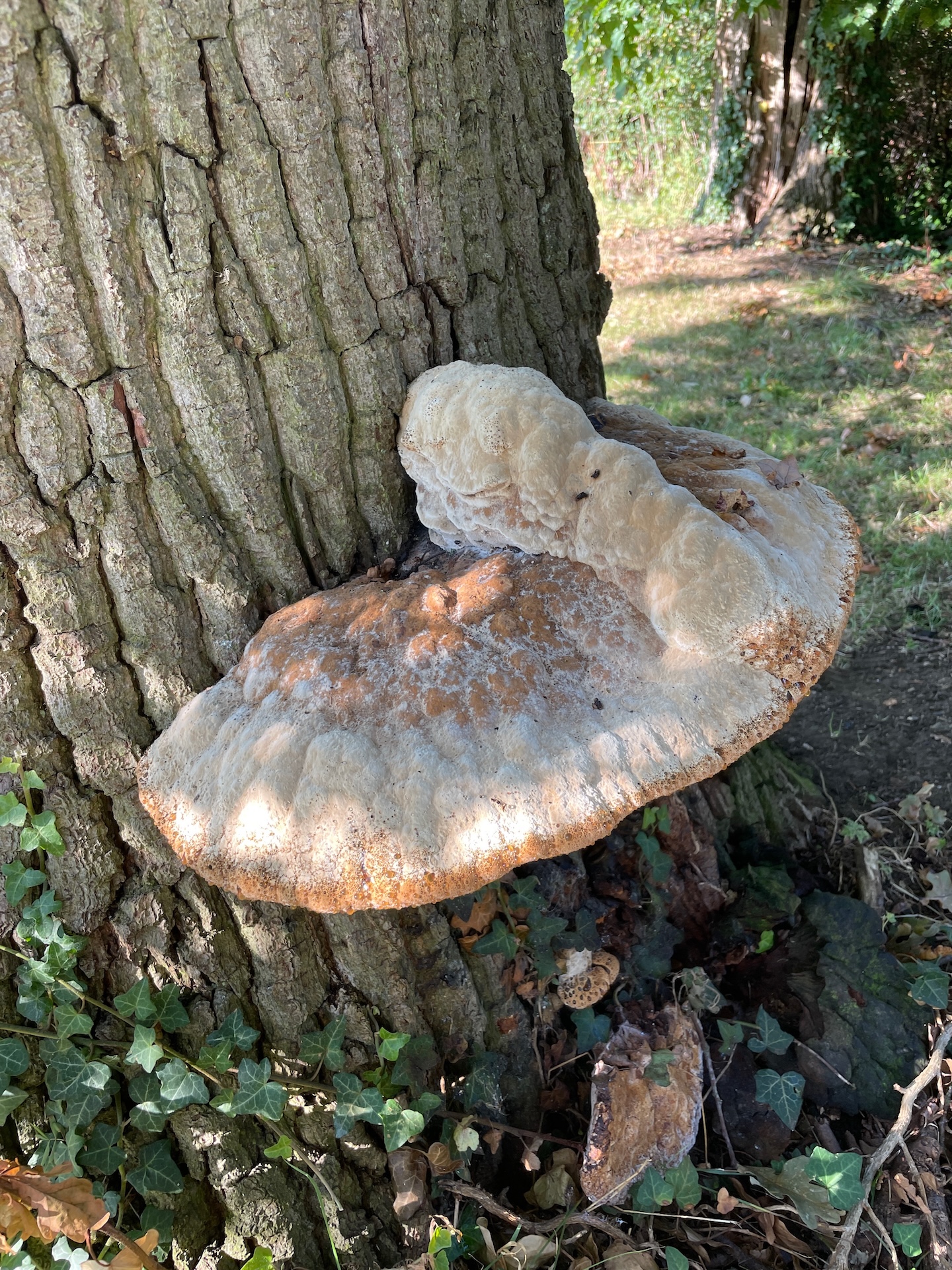
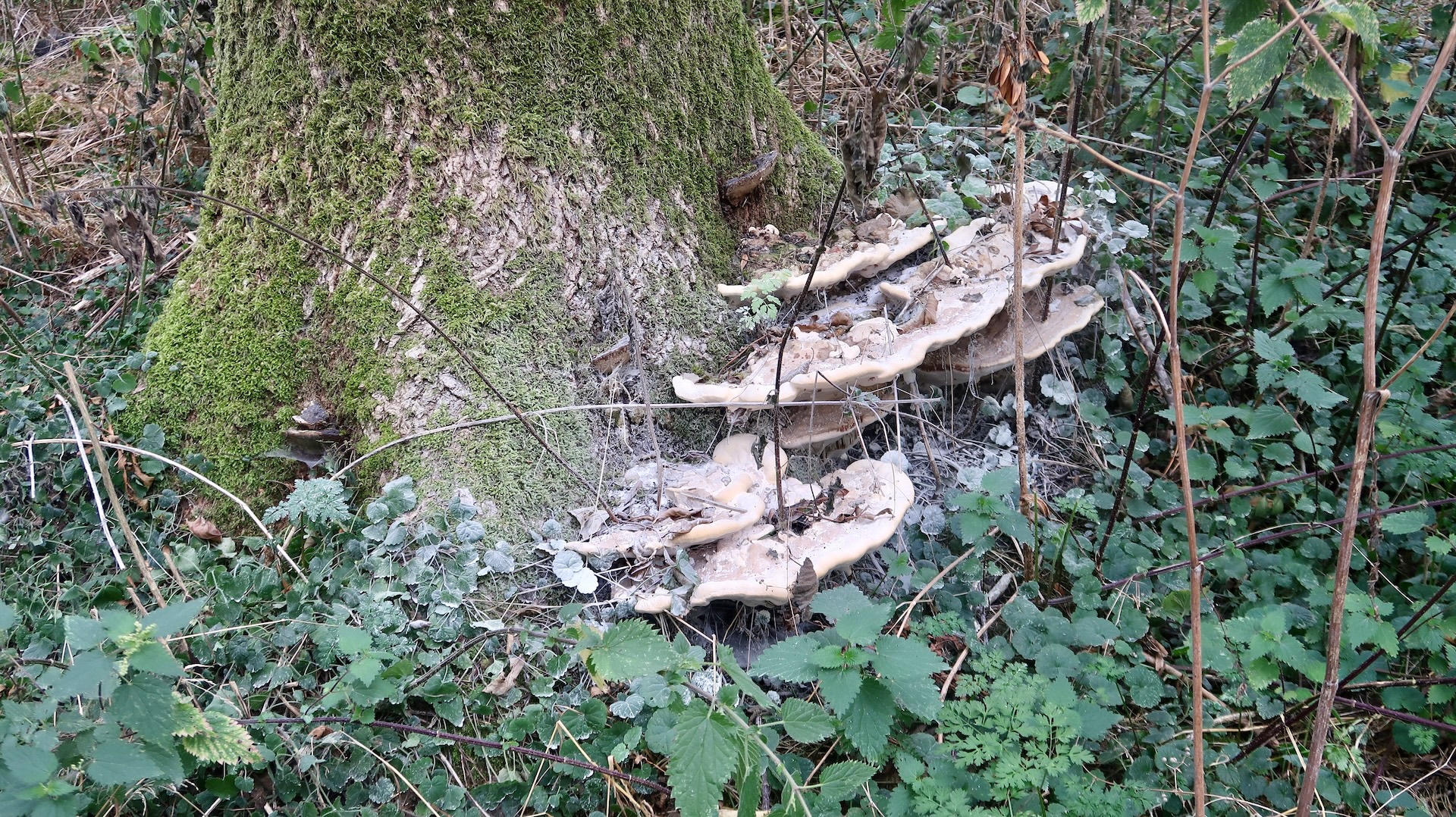
- Bracket/Shelf Fungi: Grow in shelf-like layers on trunks and branches. Examples include turkey tail (Trametes versicolor) and artist’s conk (Ganoderma applanatum).
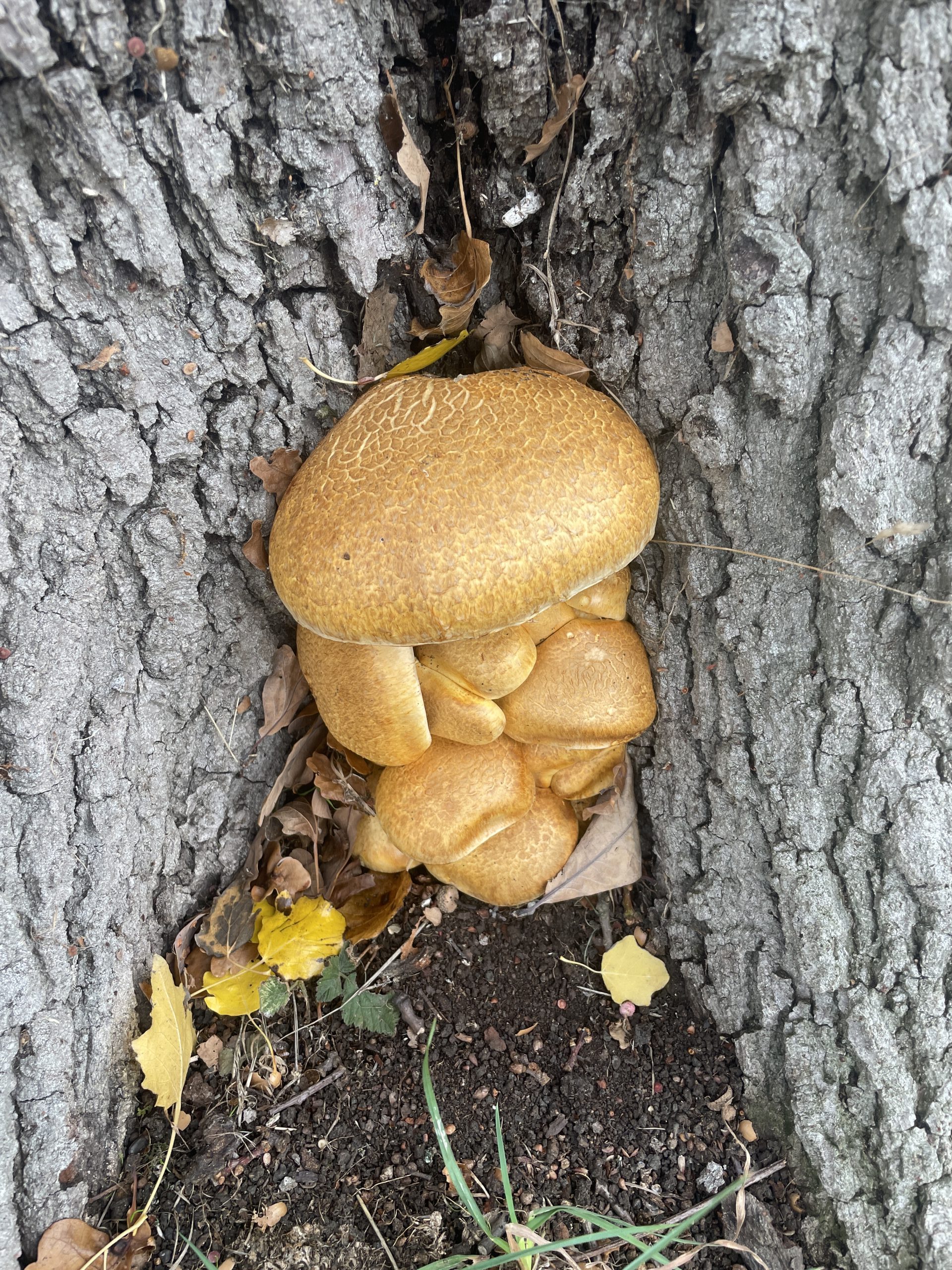
- Honey Fungus: Recognizable by honey-colored mushrooms at the base of trees; causes root rot.
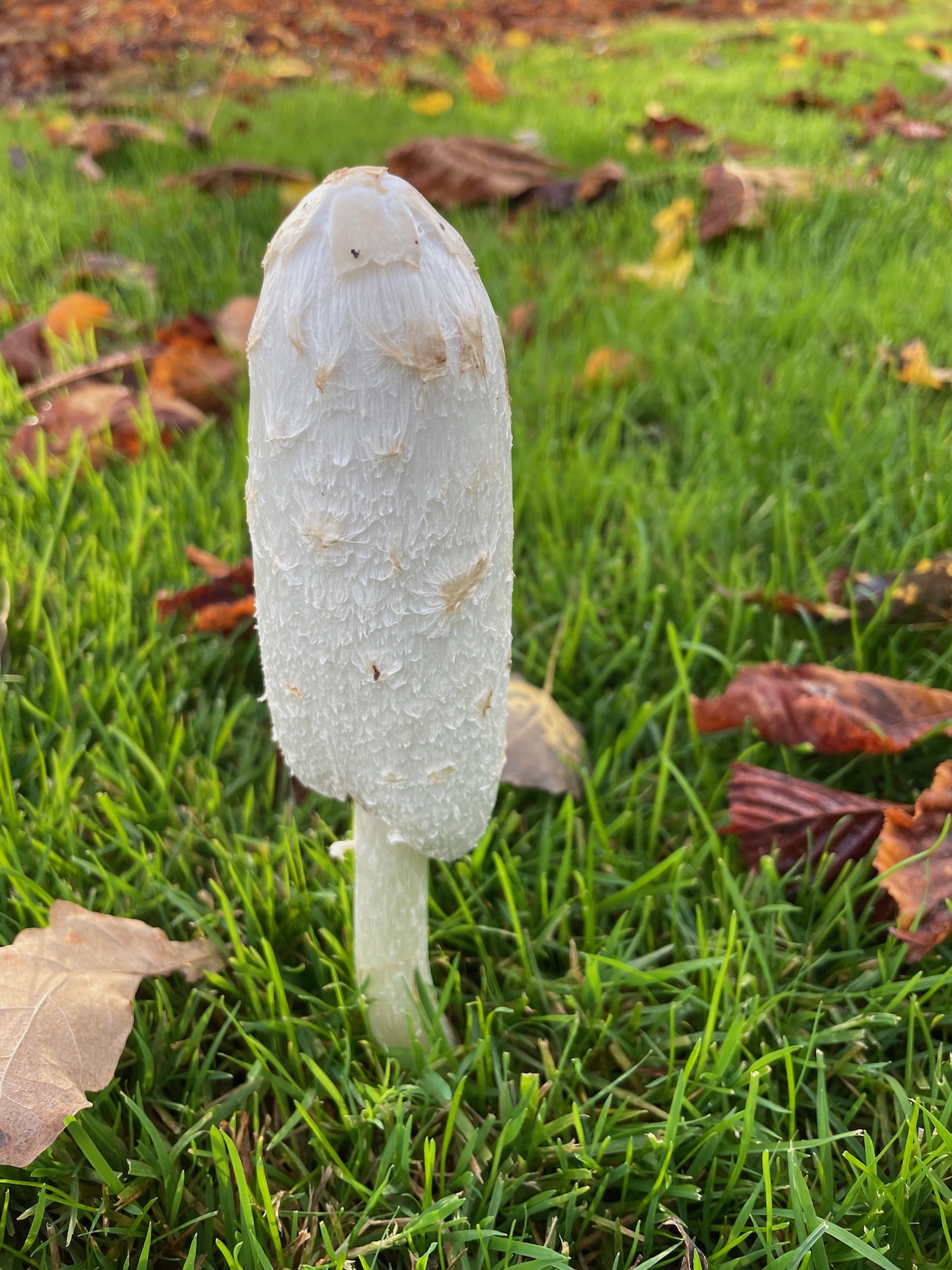
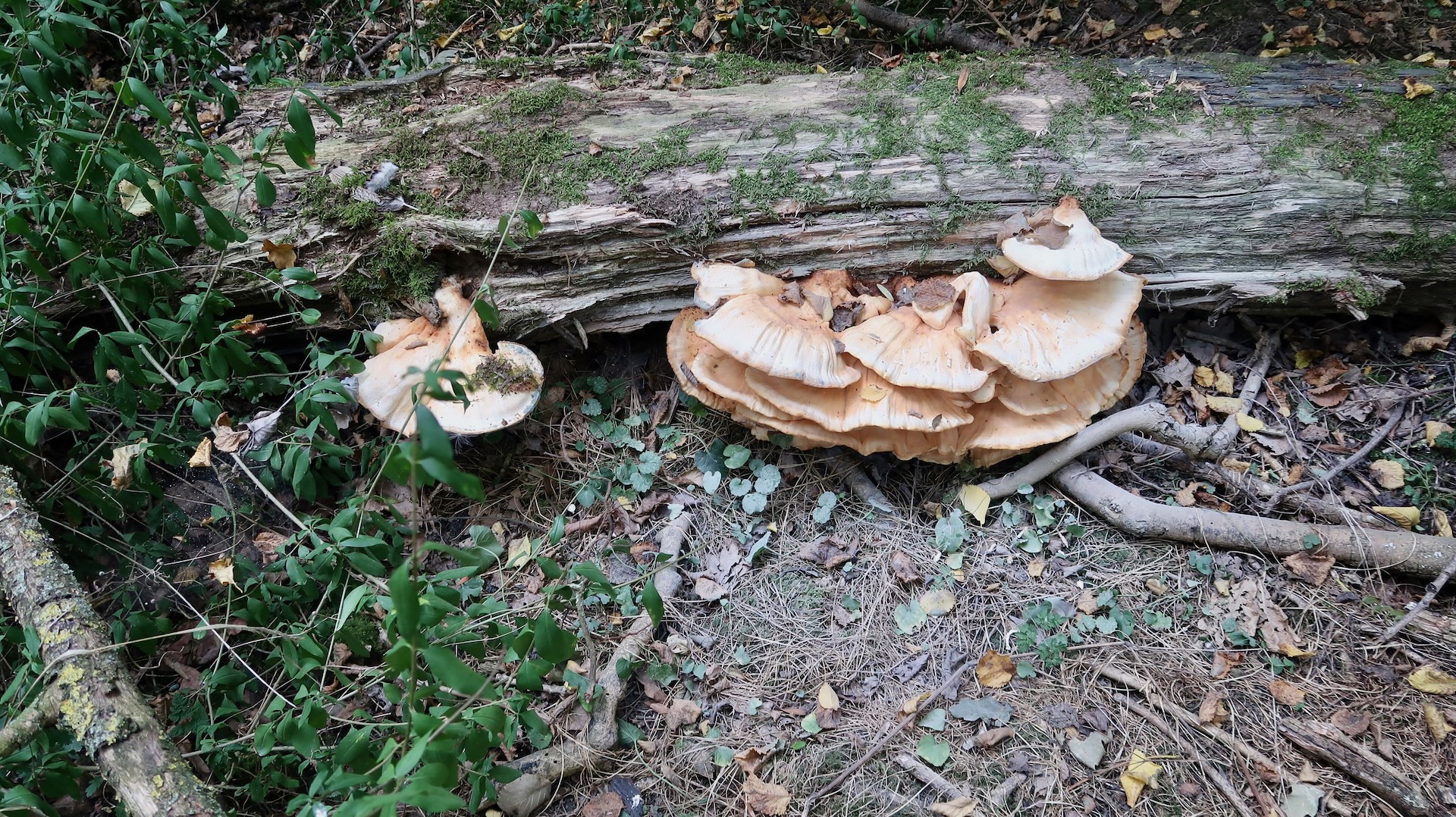
- Oyster Mushrooms: Often found on dead or dying hardwoods; edible and not harmful to healthy trees.
- Anthracnose: Causes leaf blotches and can spread to stems, affecting maples, ashes, oaks, and sycamores. [angi.com]
Ecological Importance of Fungi on Trees
- Nutrient Cycling: Fungi decompose organic matter, releasing nutrients that support new plant growth.
- Soil Health: Mycorrhizal fungi improve soil structure and fertility.
- Biodiversity: Fungi support a wide range of organisms, from insects to mammals, and help maintain ecosystem balance. [arboristnow.com]
- Disease and Decay: While some fungi are harmful, they also create habitats for wildlife and contribute to forest regeneration by breaking down old trees. [treeming.org]
When Are Fungi a Problem?
- Pathogenic fungi can cause diseases that kill or weaken trees, such as Dutch elm disease or oak wilt.
- Structural decay from wood-rotting fungi can make trees hazardous, especially in urban areas.
- Management: Early identification and proper tree care (like pruning and avoiding wounds) can help prevent serious fungal infections. [gotreequotes.com]
Visual Examples
- Tree Bark Fungus Identification Guide (Gardening Know How)
- 21 Mushrooms that Grow On Trees (with Pictures)
- Common Mushrooms That Grow on Trees (House Digest)
In summary:
Fungi on trees are not just a sign of decay—they are vital players in forest ecosystems, supporting nutrient cycling, soil health, and biodiversity. However, some fungi can be harmful to living trees, so understanding their types and roles is key to both conservation and tree care.