Very sad to hear of another resident passing away in our small village. RIP.
It made me think of how Stubton will evolve without new young blood replacing our older generation. I was very pleased to hear that the Council is applying for a grant to assist the elderly, as an aside.
Key Challenges in our Village
- Population Decline: With fewer young families moving in, the village risks depopulation.
- Economic Strain: Local services, and farms may struggle without a steady workforce or customer base.
- Social Isolation: Elderly residents often face loneliness, especially as peers pass away.
- Infrastructure Decay: Transport links, may close due to lack of demand.
Possible Pathways for Renewal
- Attracting Younger Residents
- Affordable housing initiatives
- Recent planning applications could attract younger people to move into the village (9 possible dwellings).
- Incentives for remote workers or small businesses
- Affordable housing initiatives
- Community Services
- Volunteer networks to support elderly care
- Shared transport schemes for mobility
- Cultural & Heritage Projects
- Preserving traditions, festivals, and local history to draw tourism
- Sustainable Development
- Small-scale agriculture or eco-tourism to create jobs
Stubton Demographic Highlights
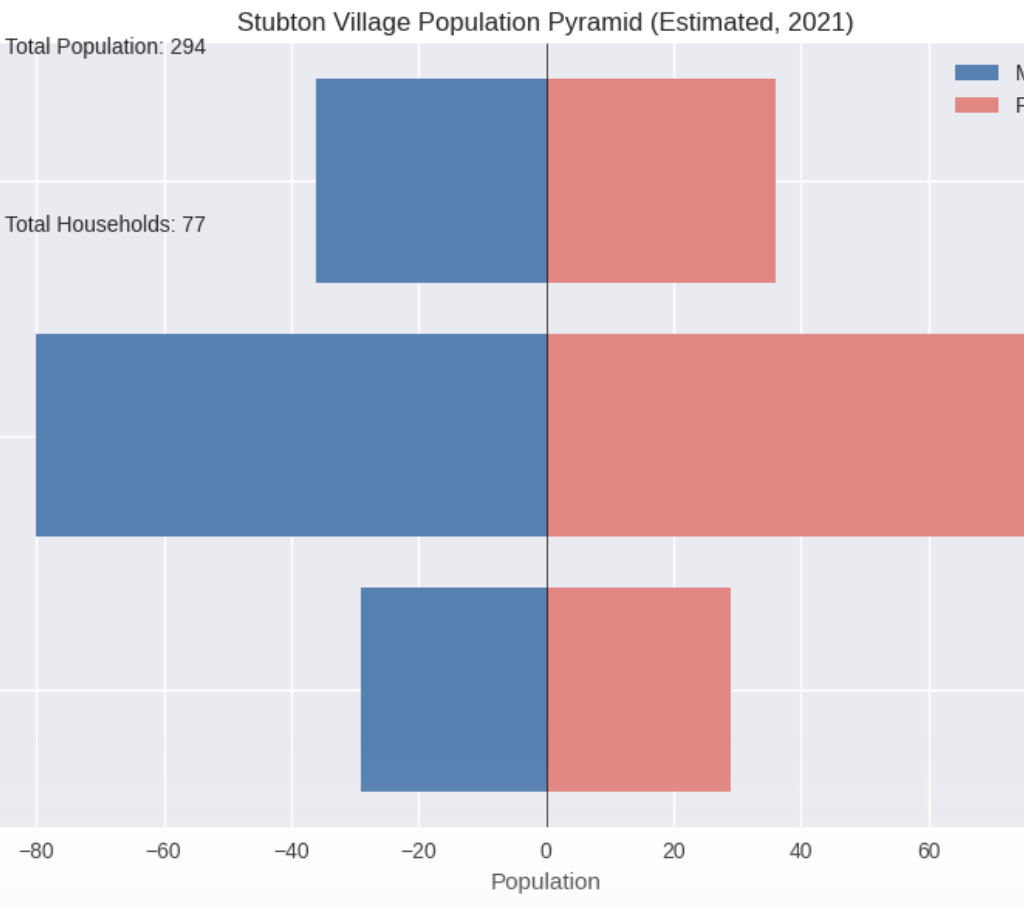
- Population (2021 census): ~294 residents
- Households: ~77
- Mean age: ~45 years
- Age distribution (estimated):
- 20% under 18 (~59 people)
- 55% between 18–64 (~162 people)
- 25% aged 65+ (~73 people)
- Gender balance: Roughly equal male/female split
What This Model Shows
- Aging population: With one-quarter of residents aged 65+, Stubton reflects the rural trend of older demographics.
- Family presence: Around 20% under 18 indicates some younger families, though schooling requires travel to nearby villages.
- Community sustainability: The middle-age group (18–64) forms the majority, sustaining local services and activities.
Implications for Planning
- Healthcare & mobility: Higher demand for elderly support services.
- Housing: Limited stock, with relatively high prices compared to nearby areas.
- Community vitality: Strong traditions and civic pride (e.g., “Best Kept Village” awards) help balance demographic challenges.
Let’s project Stubton forward 20 years, using rural demographic trends in England as a guide.
Likely Demographic Shifts (2045)
- Population decline: Without new families moving in, Stubton’s ~294 residents could shrink to ~200–220.
- Ageing profile: The proportion of residents aged 65+ could rise from 25% today to 40–45%, meaning nearly half the village would be elderly.
- Youth scarcity: The under‑18 population might fall below 10%, leaving very few children and no local school presence.
- Household changes: More single‑occupancy homes as widowed residents remain, with fewer multi‑generational households.
Community & Infrastructure Impacts
- Services: Bus routes may close if demand drops. Healthcare access becomes critical, with reliance on mobile or regional services.
- Housing: Empty properties could increase, though some may be bought as second homes or weekend retreats.
- Social fabric: Civic traditions (like “Best Kept Village” awards) may continue but with fewer volunteers. Isolation risk grows unless new networks form.
Possible Renewal Scenarios
- Attracting younger families: Affordable housing, broadband investment, and remote‑work incentives could rebalance demographics.
- Sustainable projects: Renewable energy (solar farms, community wind) could provide income and attract eco‑minded residents. Not my most popular scenario!
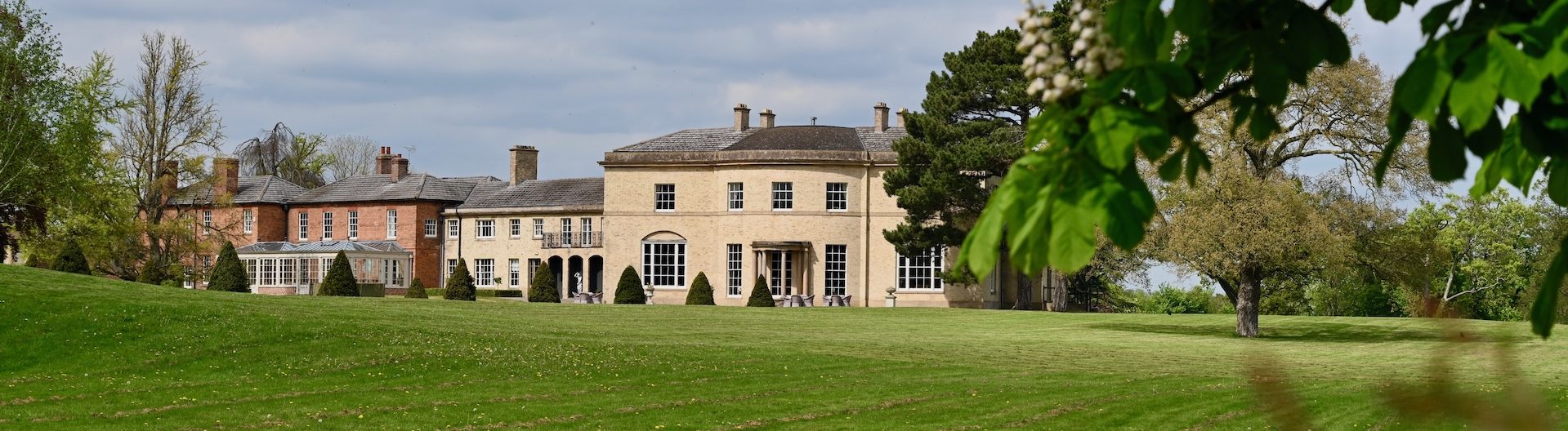
- Tourism & heritage: Stubton Hall and local history could anchor a niche tourism economy.
- Community innovation: Shared transport, co‑housing, could keep services alive.