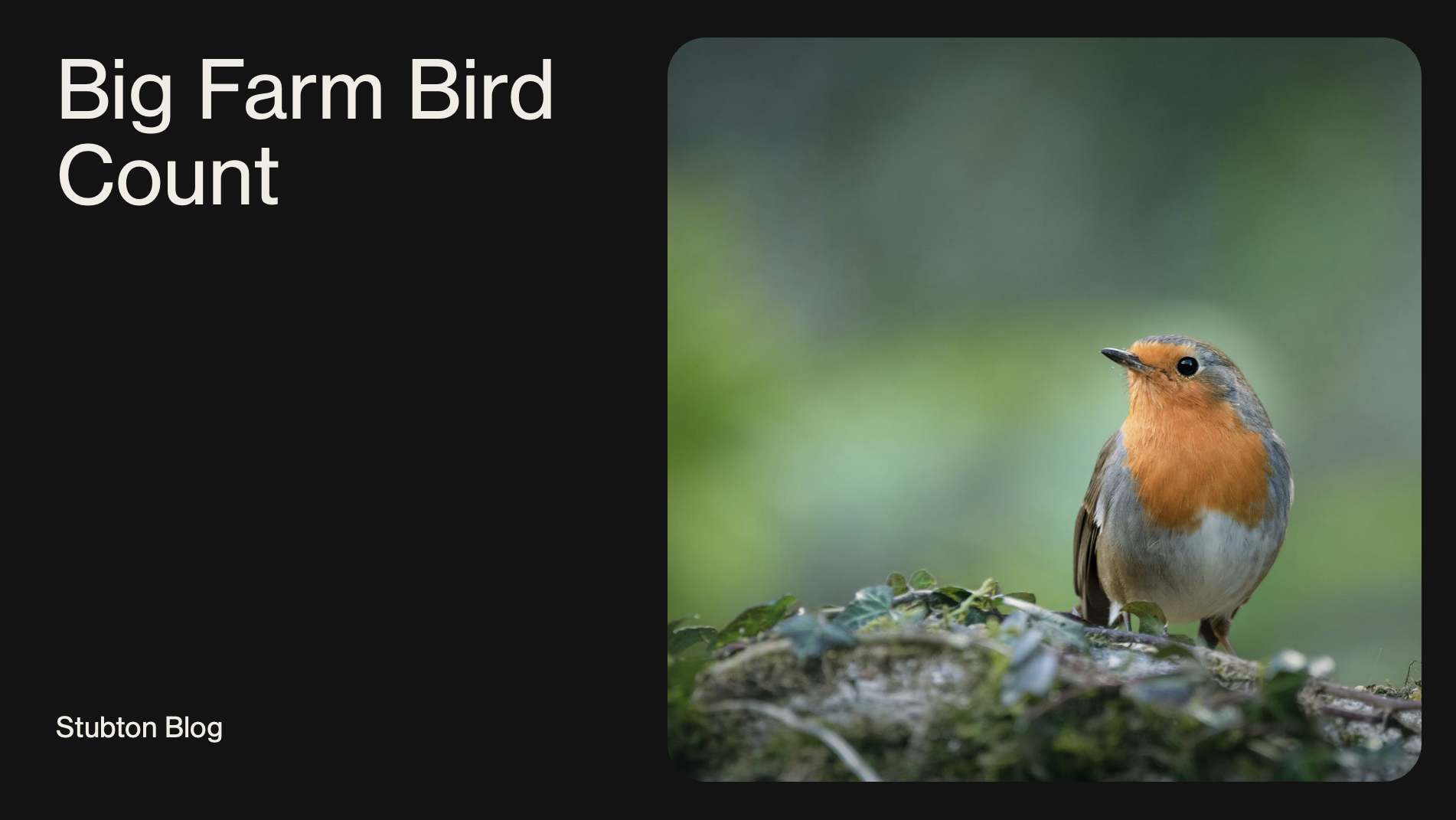
The national annual census of farmland birds – The Big Farmland Bird Count – is now underway and farmers, land managers and other ‘working conservationists’ up and down the country are encouraged to get out onto their land to count their birds over the next two weeks.
Run by the Game & Wildlife Conservation Trust (GWCT) and sponsored by the NFU, the BFBC is in its 13th year, and the 2026 count will run until 22 February.
Source Game & Wildlife Conservation Trust
The count provides a fascinating snapshot of the bird populations on farms across the UK and aims to raise awareness of the important role that farmers and other land managers play in the conservation of our native farmland birds, while highlighting the crucial support agri-environment schemes provide to make this happen. To kick start the count, last Wednesday more than 60 guests, ranging from farmers, journalists, representatives from the NFU and other sponsors, Natural England, RSPB, Wildlife Trusts and the Woodland Trust, to bird enthusiasts who carry out multiple counts each year, gathered at the GWCT’s demonstration farm, the Allerton Project in Leicestershire. They enjoyed a walk around the muddy fields, spotting birds with the help of experts and learning about the research and conservation work that takes place here.
The Allerton Project has been at the forefront of demonstrating how farming and food production can sit alongside a thriving natural environment since the GWCT began operations here in 1992, following the generous donation of this 320ha estate in the village of Loddington by the previous owners, Lord and Lady Allerton. It was also here at Allerton where the idea for the BFBC was conceived and developed more than a decade ago.
Nick von Westenholz, GWCT CEO, says: “We have more than tripled the number of farmers and land managers taking part in the BFBC since it started in 2014.
“This is such a hugely important initiative, raising awareness of the crucial role that farmers play in helping our farmland birds, and measuring the impact of the conservation work that many farms and estates carry out.
“Data captured by land managers is a fundamental element of creating a broad evidence base for what is going in the countryside and which interventions are working to help restore nature. At The Game & Wildlife Conservation Trust we employ a wide range of brilliant scientists, working on a whole variety of projects addressing specific challenges. It is great to augment this work with initiatives like the Big Farmland Bird Count, which gives us a snapshot of our farmed environment that would be hugely challenging to replicate without the involvement of thousands of farmers, land managers and landowners.”
David Exwood, NFU Deputy President, says: “The NFU is proud to sponsor the Big Farmland Bird Count. It is a fantastic event that we encourage all our members to get involved in. We know that they are doing great things on their farms for conservation, making space for nature as well as producing food. This is a simple but effective way of telling the story of what is happening on our farms.
“The count gives us a unique insight into our nation’s farmland birds, while showcasing a snapshot of the great work farmers do to protect the environment.
“From wetlands and hedgerows to woodlands and wildflower meadows, the UK is home to an array of biodiverse farmlands, and the count is a fantastic chance to see first-hand the birds and habitats farmers care so much about preserving.
“The Big Farmland Bird Count shows how agri-environment schemes like the Sustainable Farming Incentive (SFI) can make a real difference to the environmental work farmers do. It is vital that the scheme remains accessible for all active farmers so environmental ambitions can continue.”
Why does it matter?
Since 1970 the UK has lost 73 million wild birds and now more than one in four bird species are on the Red List. Farmland birds have shown the biggest decline, with numbers falling by 63% in the past 50 years.
We will not halt the alarming declines of species such as curlew and skylarks if we leave it to nature reserves and national parks alone. With 72% of land in the UK being farmland, the key to reversing the decline in wildlife is held by those looking after this land and biodiversity recovery must take place alongside sustainable food production.
The BFBC helps us figure out what is working for wildlife and provides farmers with a way of measuring the impact their conservation efforts are having on the landscape. This data helps us demonstrate why it is essential that the Government continues to adequately fund agri-environment measures.
Over the past decade, the count has enabled us to spot trends and changes in the abundance of certain species. One such example is the yellowhammer, which had declined dramatically, but has since increased four-fold on farms with both an agri-environment scheme and supplementary feeding in place.
Reasons for the decline
Changes in farming methods, such as the removal of hedges and natural wildlife corridors, and the use of pesticides since the 1970s mean many species, such as yellowhammers, corn buntings and grey partridges have struggled to find enough food and suitable habitat. There have also been big increases in predators like crows and foxes, which prey on eggs, chicks and adult birds.
The BFBF also highlights how we can all help our birds during the winter months when food is scarce and temperatures drop, a time often referred to as the ‘hungry gap’ when natural food sources are running low. These are some of the measures farmers can implement:
- Planting and sympathetically managing hedgerows (not cutting every year) to provide farmland birds with nesting habitat, safe places to hide from predators and berries and insects to eat.
- Creating and keeping wide field margins – conservation headlands – where little or no pesticides are used, allowing some broad-leaved weeds to flourish, and sowing strips of plants to provide bird seed.
- Leaving some areas of land cultivated but uncropped to provide food and suitable nesting for birds that prefer to forage and nest on the ground, such as red-listed lapwing, skylark and stone curlew.
- A pond or wetland area around the farm can help attract wildfowl and wading birds.
- All these measures help to provide food, nesting habitat and a safe haven from predators.
New digital recording platform
All the data is now being recorded on the PERDIXPro Fieldbook app, making the processing of your results much simpler and easier. Participants can input counts instantly as they record out in the field, or save the form in draft and complete and submit it later.
The app can be downloaded onto any mobile phone or tablet. There is still the option of filling in a paper version of the count sheet, and either sending it to us, or inputting it yourself later through the app.
All the details of how to take part, bird identification guides and count sheets, are available on the Big Farmland Bird Count website.