Below is a News article from LCC – notice in July that the Claypole road is planned for resurfacing. 20-24 July Shire Lane will be resurfaced (diversions will be in place).
Below is a News article from LCC – notice in July that the Claypole road is planned for resurfacing.
If you’ve been out on the roads lately, you’ll have seen it happening. Probably.
Fresh tar. Loose chippings. 20mph signs everywhere.
It might not look like much on its own, but across the county, something big is happening that is having a positive impact on a whole bunch of roads. Two schemes this summer, Surface dressing and the Re-Tread scheme are underway making for impressive figures and better roads.
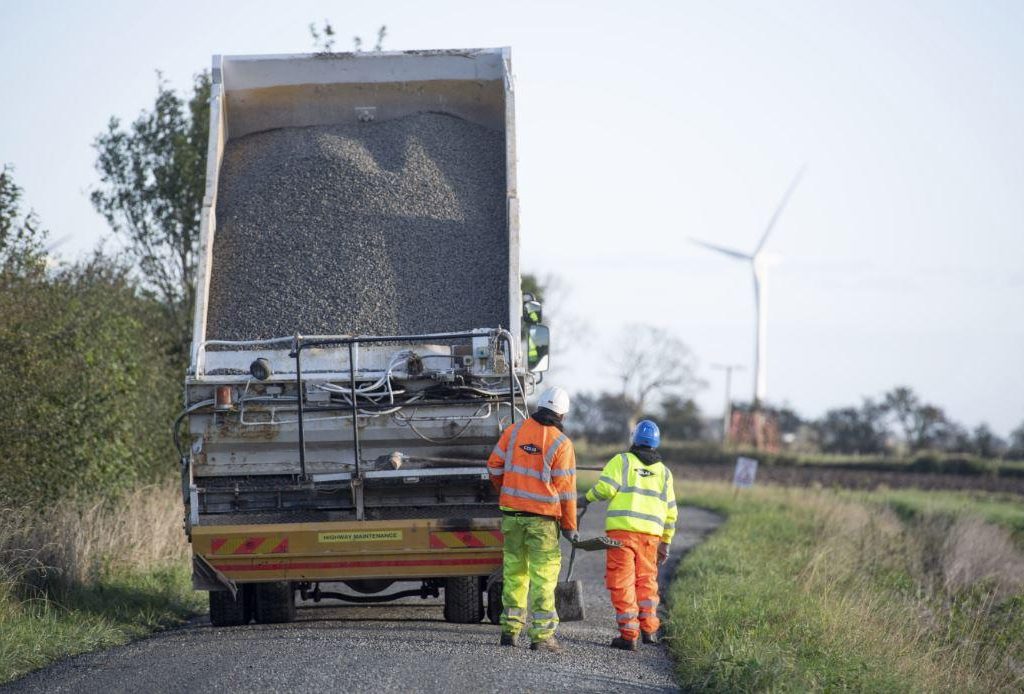
Surface dressing is known as chip and tar. A road gets prepped and treated with a sticky substance and then loose chippings are paid into it. These are then compressed down into the sticky stuff, sounds simple (is pretty straightforward) and is a massive boost for the road being treated.
1,305 tennis courts worth of road (size-wise) improved since April
Since early April, our Surface dressing crews have already covered 872,894 square metres of Lincolnshire roads. That’s about 96 miles of road already improved, or – if you prefer – 1,305 tennis courts laid out side by side. Or a very-long-way-round stretch from Lincoln to Skegness… and most of the way back again.
And the programme is not even half-way through, with the vast amount of work still on track to finish by mid‑June, even with a few weather‑related slowdowns along the way.
Cllr David East, executive member for highways, said: “The scale of what’s being delivered right now is huge.
“We’re protecting roads across the county in a practical, cost‑effective way, and it means smoother journeys now and longer‑lasting roads for the future. It’s exactly the sort of investment and work being done by Highways that makes a real difference to people in their day-to-day travels.”
There’s one thing that always has the final say with this kind of work and that’s the weather. Surface dressing can’t go down if roads are wet or even slightly damp. The sticky stuff just won’t bond properly. So, when the rain comes, work stops. Simple as that. And that’s caused a few short delays recently. Nothing major, but enough to keep crews shifting things around day by day to stay productive and keep standards high.
So, with all that in mind, here’s a few things to be aware of. When the work does go down, it doesn’t look finished straight away. It can feel rough. Look patchy. There’s loose stone sitting on the surface.
And that’s fine, that’s how it’s meant to be. Sweepers go through to clear excess chippings and then they come back again to sweep up any bits not compacted down. Road markings and studs are reinstated once everything has settled.
You’ll notice that those 20mph advisory signs stay in place while this is happening. The speed restriction protects the surface and stop loose material being thrown around. Give it a bit of time and traffic does the rest to bed in the road and smooth it out.
Surface dressing isn’t about fixing a failure on the road, it’s about stopping it happening in the first place. Sealing the road is the best way to keep water out which lets the road itself hold everything together so potholes don’t get the chance to form. It’s quick, cost‑effective and it can add years to the life of a road. Even the leftovers get reused – loose chippings are collected and kept, ready to go back out as part of the 2027 programme.
Different schemes for different road conditions
But not every road can be treated this way. Some are past the point where Surface dressing is possible and those that are like that need something deeper. That’s where the in‑situ recycling programme comes in.
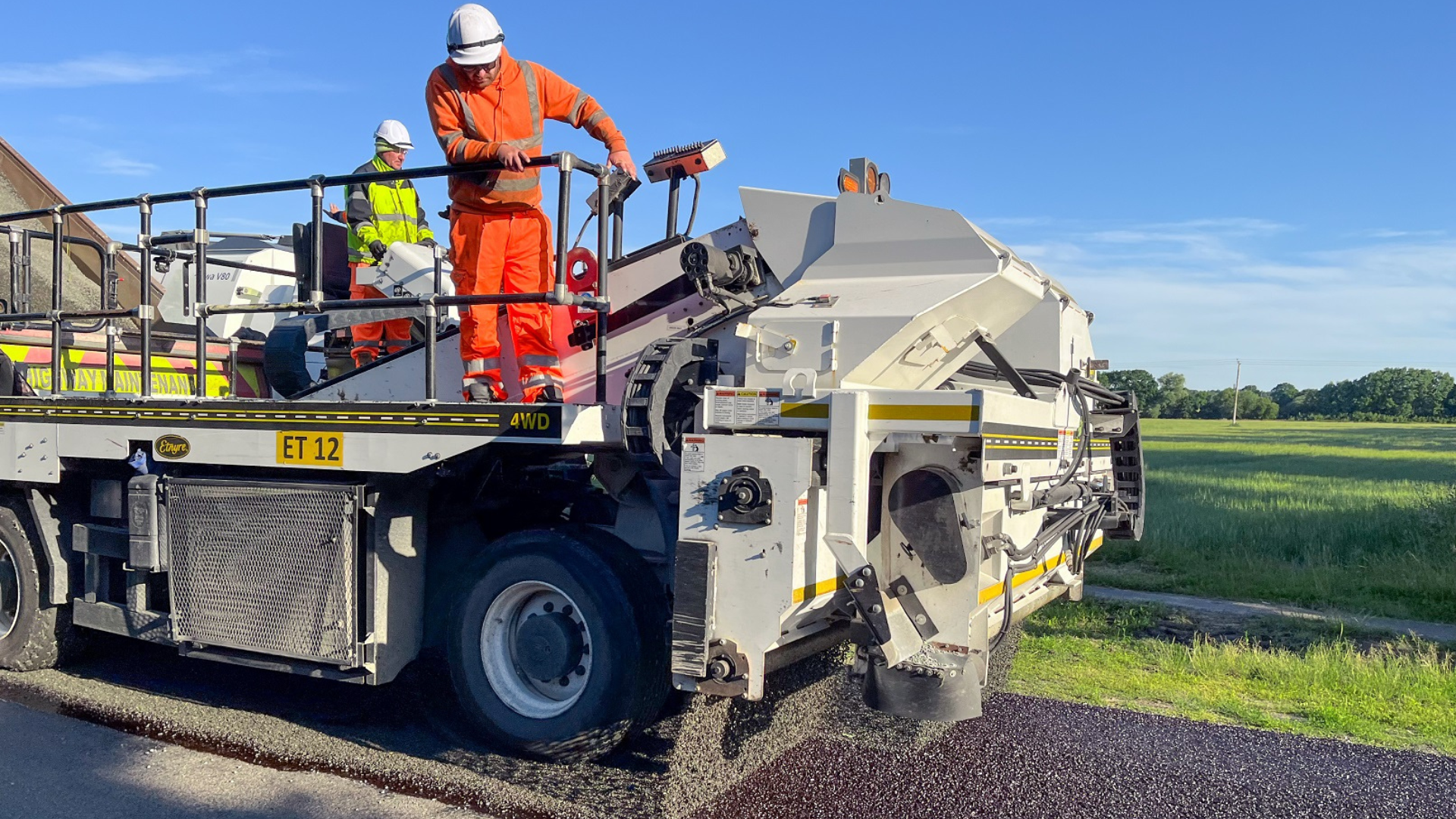
It’s a completely different approach to making roads right where, instead of ripping the road out and starting again, the existing surface is reused right where it sits. Specialist machines break up the top layers of the road, crush it down, mix it with binding agents, and then lay it back out to form a brand new, stronger base in one continuous process.
It’s a much more environmentally-friendly way to repair roads than by digging them all up and replacing then. Re-tread means that there’s no need for polluting lorries to have to haul old material away, and there’s equally no need to bring in huge volumes of new aggregate because what was already there becomes the new road.
And it just a few weeks of work, around 8,000 tonnes of material from previous works have gone back through that process. That’s roughly the weight of 667 double‑decker buses of road rubble, all reused instead of being wasted.
So, it’s faster than traditional road rebuilds, is less disruptive, needs fewer lorry movements in and out and makes a much smaller impact on the environment. Add to that the fact that structurally, it works AND it strengthens roads that have started to fail, giving them a solid new foundation before the final surface is applied – and you can see why LCC is doing this across the county.
Phase one of that local programme is nearly complete now. Just a few sites left to do, including Gravecoat Lane in Quadring and locations in Sutton St James.
One scheme at Beck Bank in Gosberton Clough has been rescheduled to avoid clashing with other works nearby. New dates will be shared with the local area.
Phase two coming next month
Phase two is already planned and will begin from 27 July, moving into sites in Thorpe St Peter, Kingerby, Norton Disney and Claypole.
Alongside all of this, crews are also carrying out grip digging along the verge to help further improve the areas. It’s not the most visible part of the job, but it matters. Grip digging helps water drain away from the carriageway and into nearby ditches, reducing standing water and protecting the road structure underneath.
It’s an all-encompassing method of road improvement; Surface dressing to protect good roads early, In‑situ recycling to rebuild the ones that need it and drainage work to stop problems coming back.
Most of it passes by in seconds when you’re driving through but, across the county, it’s adding up mile-by-mile to improve Lincolnshire’s road network.